


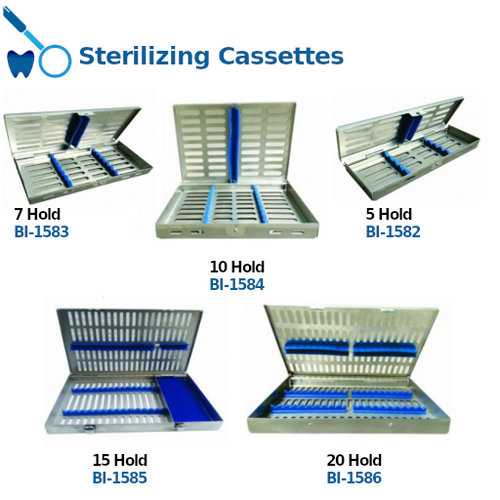
Sterilizing Cassette?
A sterilizing cassette is a metal or plastic tray with a lid used to hold dental or surgical instruments. They:
-
Keep instruments organized.
-
Protect instruments during sterilization.
-
Reduce handling, improving safety and efficiency.
2. Steps to Sterilize Cassettes
Step 1: Pre-cleaning
-
Remove debris or blood from instruments.
-
Use a brush, ultrasonic cleaner, or detergent solution.
-
Rinse thoroughly with clean water.
Step 2: Loading the Cassette
-
Arrange instruments loosely, ensuring all surfaces are exposed.
-
Avoid overloading—steam or sterilizing gas must reach every instrument.
-
Keep sharp instruments tip-down or protected to prevent injury.
Step 3: Drying
-
Ensure instruments are dry before sterilization (especially for autoclaves) to prevent corrosion and spotting.
Step 4: Wrapping or Sealing
-
If your practice uses cassette wraps or sterilization pouches, seal them.
-
Some cassettes are perforated and do not require extra wrapping if used in steam sterilizers.
Step 5: Sterilization
Choose the appropriate method based on instruments and cassette type:
-
Steam Sterilization (Autoclave)
-
Temperature: 121–134°C (250–273°F).
-
Pressure: 15–30 psi.
-
Time: Usually 15–30 minutes depending on load.
-
Steam penetrates through perforations of the cassette.
-
-
Chemical Vapor Sterilization
-
Uses chemical solutions under heat and pressure.
-
Suitable for instruments sensitive to corrosion.
-
-
Dry Heat Sterilization
-
High temperature without moisture.
-
Longer cycles (1–2 hours at 160–180°C).
-
6. After Sterilization
-
Let cassettes cool before handling.
-
Store in a clean, dry area until use.
-
Check sterilization indicators (tape or internal indicators) to confirm sterilization.
packing 1 pcs
